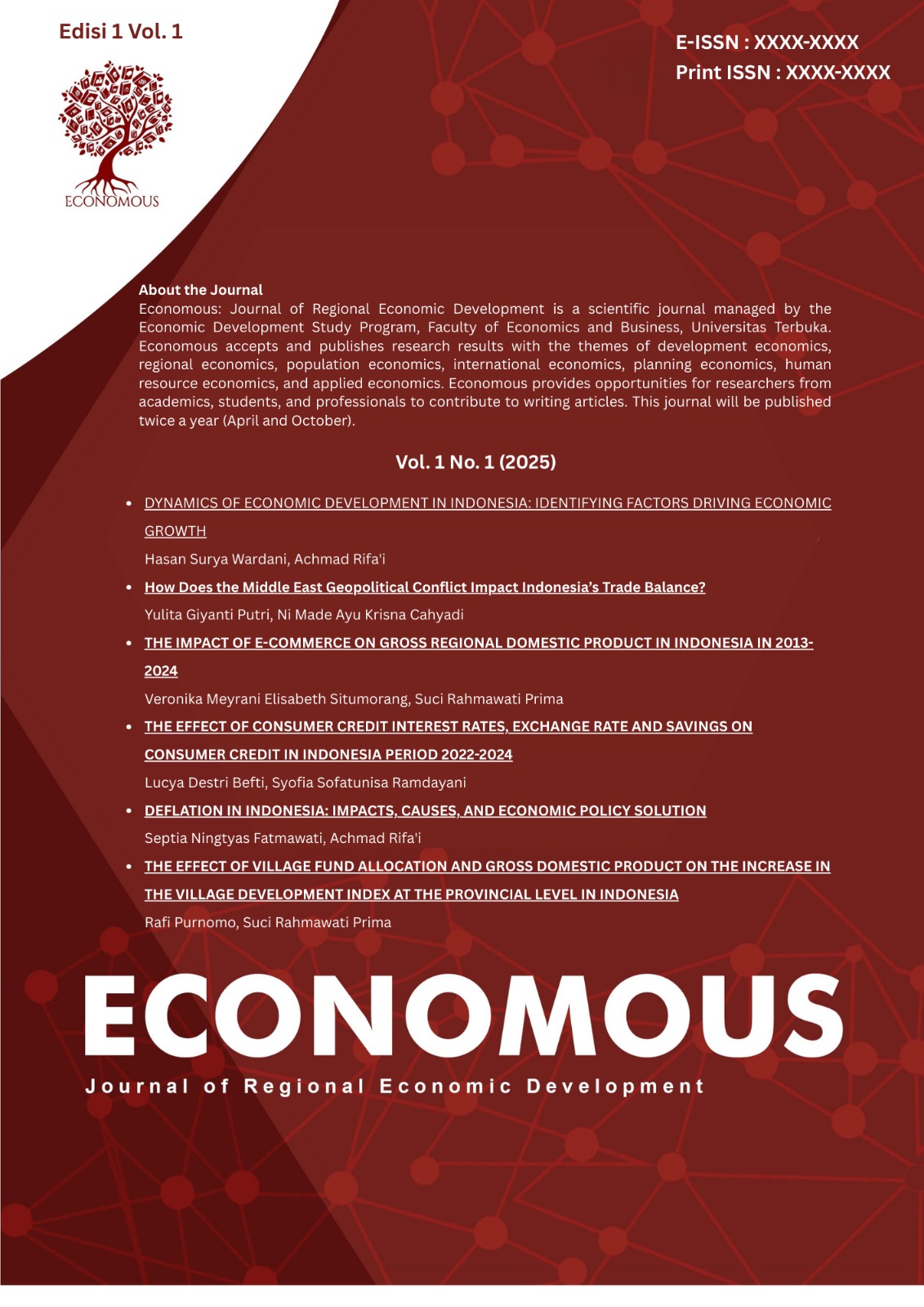
How Does the Middle East Geopolitical Conflict Impact Indonesia’s Trade Balance?
DOI:
https://doi.org/10.33830/economous.v1i1.10795Keywords:
Geopolitical Conflict, Middle East, Trade of BalanceAbstract
The ongoing conflict between Israel and Palestine in the Middle East has escalated in October 2023 and continues, claiming thousands of lives and damaging infrastructure. This tension not only threatens regional stability but can also trigger global economic turmoil. This study analyzes the impact of the Middle East geopolitical conflict on Indonesia's trade balance using descriptive and comparative quantitative methods with secondary data. The results show that the geopolitical conflict in the Middle East has an impact on Indonesia's trade balance, especially from the decline in the surplus value and total trade during the conflict period. The conflict can cause an increase in energy commodity prices, hampered logistics movements, depreciation of the exchange rate, and global economic turmoil. Therefore, it is necessary for Indonesia to minimize the negative impact of the Middle East geopolitical conflict on Indonesia's trade balance, such as diversifying export and import markets, increasing supply chain resilience, strengthening economic diplomacy, and increasing economic competitiveness.
Downloads
Published
Issue
Section
License
Copyright (c) 2025 Yulita Giyanti Putri, Ni Made Ayu Krisna Cahyadi

This work is licensed under a Creative Commons Attribution 4.0 International License.