Impact of Classroom Climate on Students’ Self-Efficacy and Mathematics Achievement in Secondary School Mathematics
DOI:
https://doi.org/10.33830/hexagon.v4i1.13360.Keywords:
classroom climate, self-efficacy, mathematics achievement, learning environment, secondary educationAbstract
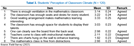
This study examined the effect of classroom climate on students' self-efficacy and achievement in senior secondary school mathematics in Odeda Local Government Area, Ogun State, Nigeria. Guided by Bandura’s Social Cognitive Theory, the research employed a descriptive survey design involving 120 students selected through stratified and simple random sampling from eight schools. Data were collected using the Students’ Perception of Classroom Environment Questionnaire (SPCEQ), the Mathematics Self-Efficacy and Achievement Scale (MSEAS), and a Mathematics Achievement Test (MAT). Data were analysed using Pearson Product-Moment Correlation and descriptive statistics. The findings revealed that most classrooms were physically conducive, adequately ventilated, well-seated, and orderly, but lacked sufficient instructional materials and visual aids. The Pearson correlation results showed no statistically significant relationship between classroom climate and either students’ self-efficacy or their achievement in mathematics. These results suggest that while classroom comfort contributes to learning satisfaction, it is not a sufficient condition for improving academic outcomes. Students’ confidence and performance in mathematics are more strongly influenced by effective teaching practices, feedback, and motivational support than by environmental factors alone
References
Akindipe, O. O. (2025). Parental involvement intervention: Effect on students’ self-efficacy and math achievement among a Nigerian sample. Frontiers in Psychology, 16, Article 1589069. https://doi.org/10.3389/fpsyg.2025.1589069
Asanre, A. A., & Chinaka, T. W. (2024). Students’ self-efficacy in senior secondary school mathematics: Academic engagement as a predictor variable. Research in Educational Policy and Management, 6(2). https://doi.org/10.46303/repam.2024.15
Bandura, A. (1977). Self-efficacy: Toward a unifying theory of behavioral change. Psychological Review, 84(2), 191–215. https://doi.org/10.1037/0033-295X.84.2.191
Bandura, A. (1986). Social foundations of thought and action: A social cognitive theory. Prentice Hall.
Bandura, A. (1997). Self-efficacy: The exercise of control. W. H. Freeman.
Bizimana, E. (2025). Classroom climate and mathematics achievement in sub-Saharan African schools: A systematic review. African Journal of Education and Practice, 11(1), 45–58.
Bronfenbrenner, U. (1979). The ecology of human development: Experiments by nature and design. Harvard University Press.
Çelik, H. S., Demir, B., & Özbek, A. (2024). The effect of school climate on the math achievements of secondary school students. Journal for the Mathematics Education and Teaching Practices, 5(2), 57–64. https://doi.org/10.5281/zenodo.10971244
Fajemidagba, M., Salman, M., & Ayinla, O. (2012). Effect of teachers’ instructional strategy pattern on senior secondary school students’ performance in mathematics word problems in Ondo State, Nigeria. Journal of Education and Practice, 3(7), 52–60. https://www.iiste.org/Journals/index.php/JEP/article/view/1808
Federal Republic of Nigeria. (2013). National policy on education (6th ed.). NERDC Press.
Khuhro, N. (2024). Study of classroom climate, student engagement, self-efficacy and learning experiences: An analysis employing Social Cognitive Theory. Academy of Education and Social Sciences Review, 4(1), 118–126. https://doi.org/10.48112/aessr.v4i1.819
Özgen, K., & Bindak, R. (2011). Determination of self-efficacy beliefs of high school students towards math literacy. Kuram ve Uygulamada Eğitim Bilimleri, 11(2), 1085–1089.
Pietersen, D. (2022). Engaging Paulo Freire on deliberative democracy: Dialogical pedagogy, deliberation and inclusion in a transformative higher education online education space. Transformation in Higher Education, 7(1), Article a211. https://doi.org/10.4102/the.v7i0.211
Riaz, H., & Asad, A. (2018). Effect of classroom learning environment on students’ academic achievement in mathematics at secondary level. Bulletin of Education and Research, 40(2), 207–218. https://pu.edu.pk/images/journal/ier/PDF-FILES/15_40_2_18.pdf
Schunk, D. H., Pintrich, P. R., & Meece, J. L. (2008). Motivation in education: Theory, research, and applications (3rd ed.). Pearson/Merrill.
Umameh, E. (2011). The role of mathematics in science and technology education. Journal of Educational Research and Development, 6(1), 45–52.
Usher, E. L., & Pajares, F. (2008). Sources of self-efficacy in school: Critical review of the literature and future directions. Review of Educational Research, 78(4), 751–796. https://doi.org/10.3102/0034654308321456
Van Petegem, P., Aelterman, A., Creemers, B., & Rosseel, Y. (2022). External rewards, test scores and intrinsic motivation: A large-scale study of their effects on student engagement and learning strategies. Educational Psychology, 42(3), 301–320. https://doi.org/10.1080/01443410.2020.1736994
Downloads
Published
Issue
Section
License
Copyright (c) 2026 Olumuji Damillola, Bamidele Damilare E

This work is licensed under a Creative Commons Attribution-ShareAlike 4.0 International License.