Enhancing Trigonometry Learning Through Manipulative Tools: A Systematic Literature Review
DOI:
https://doi.org/10.33830/hexagon.v4i1.14126.Keywords:
trigonometry education, manipulative tools, conceptual understanding, mathematics learning, systematic literature reviewAbstract
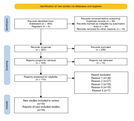
Trigonometry remains one of the most challenging topics in mathematics education due to its abstract concepts and multiple representations. Manipulative tools have been increasingly used to support students’ conceptual understanding by providing concrete and interactive learning experiences. However, evidence regarding their effectiveness in trigonometry learning remains fragmented across different educational contexts and instructional approaches. This study conducted a Systematic Literature Review (SLR) to synthesize empirical evidence on the use of manipulative tools in trigonometry education. Following the PRISMA 2020 guidelines, studies published between 2020 and 2025 were identified, screened, and evaluated using predefined inclusion criteria and quality appraisal procedures. A total of 10 studies were included in the final review. The findings revealed two major categories of manipulative tools: physical manipulatives and virtual manipulatives. Both categories were associated with improvements in students’ conceptual understanding, engagement, mathematical reasoning, and problem-solving performance. The effectiveness of manipulative-based interventions was influenced by factors such as instructional design, teacher facilitation, intervention duration, and tool characteristics. The review highlights the potential of manipulative tools to enhance trigonometry learning and provides implications for classroom practice and future research on mathematics education.
References
Ahmad, S., & Siller, H. S. (2024). Investigating the effect of manipulatives on mathematics achievement: The role of concrete and virtual manipulatives for diverse achievement level groups. Journal on Mathematics Education, 15(3), 979-1002. http://doi.org/10.22342/jme.v15i3.pp979-1002
Bruner, J. S. (1974). Toward a theory of instruction. Harvard university press.
Bungao-Abarquez, E. (2020). The use of manipulative in teaching elementary mathematics. International Journal of Linguistics, Literature and Translation, 3(11), 18-32. https://doi.org/10.32996/ijllt.2020.3.11.3
Carbonneau, K. J., Marley, S. C., & Selig, J. P. (2013). A meta-analysis of the efficacy of teaching mathematics with concrete manipulatives. Journal of Educational Psychology, 105(2), 380–400. https://doi.org/10.1037/a0031084
Cetin, O. F. (2015). Students’ perceptions and development of conceptual understanding regarding trigonometry and trigonometric function. Educational Research and Reviews, 10(3), 338-350. https://doi.org/10.5897/ERR2014.2017
De Cassai, A., Dost, B., Tulgar, S., & Boscolo, A. (2025). Methodological Standards for Conducting High-Quality Systematic Reviews. Biology, 14(8), 973. https://doi.org/10.3390/biology14080973
Dung, T. M. (2024). Enhancing students’ mathematical competency in learning the graph and properties of the sine function by Google Sheets app on smartphone. Tạp chí Khoa học Đại học Đồng Tháp, 13(7), 109-120. https://doi.org/10.52714/dthu.13.7.2024.1343
Fererde, A., Mihrka, A., Ayele, M., & Arara, A. (2024). Enhancing Students’ Conceptual Understanding and Problem-Solving Skills in Learning Trigonometry Through Contextual-Based Mathematical Modeling Instruction. International Journal of Secondary Education, 12(4), 108-119. https://elibrary.ru/item.asp?id=80836214
Ferguson, K. L. (2010). Inquiry Based Mathematics Instruction Verses Traditional Mathematics Instruction: The Effect on Student Understanding and Comprehension in an Eighth Grade Pre-algebra Classroom (Doctoral dissertation, Cedarville University). http://digitalcommons.cedarville.edu/education_theses/26?utm_source=digitalcommons.cedarville.edu%2Feducation_theses%2F26&utm_medium=PDF&utm_campaign=PDFCoverPages
Fitri, P., Hartono, Y., & Meryansumayeka, M. (2024). Gen Z Generation's Difficulties in Proving Trigonometric Identities with The Help of Gpt Chat. EDUKASIA Jurnal Pendidikan dan Pembelajaran, 5(2), 169-178. https://doi.org/10.62775/edukasia.v5i2.1251
Ismayanti, S., & Jatisunda, M. G. (2025). An analysis of students’ difficulties and problem-solving strategies in trigonometry instruction. Jurnal Inovasi Pembelajaran Matematika: PowerMathEdu, 4(1), 75-90. https://doi.org/10.31980/pme.v4i1.2647
Juandi, D., Sugiatno, S., & Noviani, N. (2025). Enhancing students’ conceptual understanding of trigonometric functions through GeoGebra-based learning. Journal of Mathematics and Learning Technology, 18(1), 1–15. https://doi.org/10.24042/ajpm.v16i1.25653
Kablan, Z. (2016). The effect of manipulatives on mathematics achievement across different learning styles. Educational Psychology, 36(2), 277-296. https://doi.org/10.1080/01443410.2014.946889
Klu, T. K., Assan, F. K., Maanu, V., & Atta, S. O. A. (2023). An investigation of the use of physical manipulatives to enhance the conceptual understanding of operations on fraction among pre-service teachers. British Journal of Multidisciplinary and Advanced Studies, 4(2), 1-11. https://doi.org/10.37745/bjmas.2022.0122
Larbi, E., & Mavis, O. (2016). The Use of Manipulatives in Mathematics Education. Journal of Education and practice, 7(36), 53-61. https://files.eric.ed.gov/fulltext/EJ1126428.pdf
Lerman, S. (Ed.). (2020). Encyclopedia of mathematics education. Cham: Springer International Publishing. https://doi.org/10.1007/978-3-030-15789-0_300003
Mengist, W., Soromessa, T., & Legese, G. (2020). Method for conducting systematic literature review and meta-analysis for environmental science research. MethodsX, 7, 100777. https://doi.org/10.1016/j.mex.2019.100777
Moyer, P. S. (2001). Are we having fun yet? How teachers use manipulatives to teach mathematics. Educational Studies in mathematics, 47(2), 175-197. https://doi.org/10.1023/A:1014596316942
Muka, T., Glisic, M., Milic, J., Verhoog, S., Bohlius, J., Bramer, W., ... & Franco, O. H. (2020). A 24-step guide on how to design, conduct, and successfully publish a systematic review and meta-analysis in medical research: T. Muka et al. European journal of epidemiology, 35(1), 49-60. https://doi.org/10.1007/s10654-019-00576-5
Namli, S. (2024). Comparing Ninth-Grade Students' Approaches to Trigonometric Ratio Problems through Real-World and Symbolic Contexts. International Education Studies, 17(4), 70-84. https://eric.ed.gov/?id=EJ1438374
Niranjan, C., & Brijlall, D. (2025). A constructivist approach to trigonometry problem solving using Manipulatives: a case study of a South African secondary school. International Journal of Research in Business and Social Science, 14(7), 573-584. https://doi.org/10.20525/ijrbs.v14i7.4397
Page, M. J., McKenzie, J. E., Bossuyt, P. M., Boutron, I., Hoffmann, T. C., Mulrow, C. D., Shamseer, L., Tetzlaff, J. M., Akl, E. A., Brennan, S. E., Chou, R., Glanville, J., Grimshaw, J. M., Hróbjartsson, A., Lalu, M. M., Li, T., Loder, E. W., Mayo-Wilson, E., McDonald, S., ... Moher, D. (2021). The PRISMA 2020 statement: An updated guideline for reporting systematic reviews. BMJ, 372, n71. https://doi.org/10.1136/bmj.n71
Piaget, J. (1972). The psychology of the child. Basic Books.
Pozdniakov, S., Freiman, V. Technology-supported innovations in mathematics education during the last 30 years: Russian perspective. ZDM Mathematics Education 53, 1499–1513 (2021). https://doi.org/10.1007/s11858-021-01279-6
Purnomo, D. J., Dwijayanti, I., & Nugroho, A. A. (2025). Enhancing Trigonometric Critical Thinking Through Innovative Learning: A Design Thinking Approach. AL-ISHLAH: Jurnal Pendidikan, 17(2), 2402-2414. https://doi.org/10.35445/alishlah.v17i2.6891
Qetrani, S., Ouailal, S., & Achtaich, N. (2021). Enhancing students’ conceptual and procedural knowledge using a new teaching approach of linear equations based on the equivalence concept. Eurasia Journal of Mathematics, Science and Technology Education, 17(7), em1978. https://doi.org/10.29333/ejmste/10938
Sowell, E. J. (1989). Effects of manipulative materials in mathematics instruction. Journal for Research in Mathematics Education, 20(5), 498–505. https://doi.org/10.5951/jresematheduc.20.5.0498
Tebabal, A., & Kahssay, G. (2011). The effects of student-centered approach in improving students' graphical interpretation skills and conceptual understanding of kinematical motion. Latin-American Journal of Physics Education, 5(2), 9. https://dialnet.unirioja.es/servlet/articulo?codigo=3696010
Yaniawati, P., Sari, N. M., Rokhmah, N. I., Fitri, N., & Hadiansyah, S. (2022). Development of M-learning teaching materials on trigonometric materials to improve mathematic connection ability. Formatif: Jurnal Ilmiah Pendidikan MIPA, 12(2). http://dx.doi.org/10.30998/formatif.v12i2.11998
Downloads
Published
Issue
Section
License
Copyright (c) 2026 Anton Suwarno, Supandi Supandi, Ida Dwijayanti

This work is licensed under a Creative Commons Attribution-ShareAlike 4.0 International License.