Problem-Solving Framework in Algebra Through Backward Error-Analysis
DOI:
https://doi.org/10.33830/hexagon.v4i1.14380.Keywords:
Backward Error-Analysis, alternative assessment, BEA-Trick FrameworkAbstract
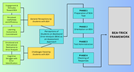
This study aimed to propose Backward Error-Analysis (BEA) as an alternative assessment method in algebra by evaluating its relevance and effectiveness and developing a problem-solving framework for classroom use. Specifically, it compared the Conventional Assessment Method and BEA in evaluating learners’ algebra performance, tested BEA’s effectiveness, assessed learners’ perceptions including general perceptions and challenges and developed a BEA-based problem-solving framework. A Quantitative Research Design was used involving 60 Grade 9 learners from Pili National High School, divided into two groups: one using conventional assessment and the other BEA. Both groups took pre-tests and post-tests, with two interventions conducted for the BEA group, and a self-constructed survey assessed learners' perceptions. Findings showed no significant difference between the two groups’ test results, yet BEA proved effective as learners’ post-test scores significantly improved. Learner perceptions highlighted factors such as engagement, perceived usefulness, efficiency, learning outcomes, and commitment, with challenges including emotional resistance and cognitive struggles in error analysis. The study also introduced the “BEA-Trick Framework” as a foundation for classroom implementation. Overall, BEA was found effective and offered unique advantages over conventional methods. It is recommended for classroom adoption to foster 21st-century skills and higher-order thinking
References
Abuzaid, R. A., & Al-Dosari, H. S. (2018). Effect of problem-solving strategies on students’ achievement and perception of usefulness in mathematics. Journal of Educational Psychology, 110(4), 569–583. https://doi.org/10.1037/edu0000243
Ali, R., & Khan, S. (2019). The effect of student commitment on performance through the use of error analysis strategies in mathematics. International Journal of Educational Research, 98, 212–220. https://doi.org/10.1016/j.ijer.2019.09.005
Ashcraft, M. H., & Krause, J. A. (2007). Working memory, math performance, and math anxiety. Psychonomic Bulletin & Review, 14(2), 243–248. https://doi.org/10.3758/BF03194059
Bergman, K., & Högberg, A. (2020). Error analysis and its impact on mathematical memory retention in secondary education. Mathematics Education Review, 31(2), 85–101.
Boaler, J. (2016). Mathematical mindsets: Unleashing students’ potential through creative math, inspiring messages and innovative teaching. Jossey-Bass.
Booth, J. L., Lange, K. E., Koedinger, K. R., & Newton, K. J. (2013). Learning algebra by comparing examples: Benefits for procedural and conceptual knowledge. Journal of Educational Psychology, 105(4), 962–976. https://doi.org/10.1037/a0031901
Borasi, R. (1996). Reconceiving mathematics instruction: A focus on errors. Ablex Publishing.
Cheng, L. P. (2012). The mathematics problem-solving beliefs and proficiency of pre-service primary teachers: Effects of a mathematics course. Australian Journal of Teacher Education, 37(9), 1–17. https://doi.org/10.14221/ajte.2012v37n9.1
Chi, M. T. H., Bassok, M., Lewis, M. W., Reimann, P., & Glaser, R. (1989). Self-explanations: How students study and use examples in learning to solve problems. Cognitive Science, 13(2), 145–182. https://doi.org/10.1207/s15516709cog1302_1
Creswell, J. W., & Creswell, J. D. (2018). Research design: Qualitative, quantitative, and mixed methods approaches (5th ed.). SAGE Publications.
Creswell, J. W. (2012). Educational research: Planning, conducting, and evaluating quantitative and qualitative research (4th ed.). Pearson.
Durkin, K., & Rittle-Johnson, B. (2012). The effectiveness of using incorrect examples to support learning about decimal magnitude. Learning and Instruction, 22(3), 206–214. https://doi.org/10.1016/j.learninstruc.2011.11.001
Flavell, J. H. (1979). Metacognition and cognitive monitoring: A new area of cognitive–developmental inquiry. American Psychologist, 34(10), 906–911. https://doi.org/10.1037/0003-066x.34.10.906
García-Sánchez, J. N., & Moreno-Guerrero, A. J. (2016). Using reflection strategies to enhance student engagement in mathematics classrooms. Educational Technology & Society, 19(4), 321–330.
Hiebert, J., Carpenter, T. P., Fennema, E., Fuson, K., Human, P., Murray, H., Olivier, A., & Wearne, D. (1996). Problem solving as a basis for reform in curriculum and instruction: The case of mathematics. Educational Researcher, 25(12), 12–21. https://doi.org/10.3102/0013189X025012012
Kapur, M. (2008). Productive failure. Cognition and Instruction, 26(3), 379–424. https://doi.org/10.1080/07370000802212669
Lazarus, K., & Rosenthal, L. (2021). Backward error analysis as a metacognitive tool: Impacts on student logic and mathematical reasoning. Journal of Mathematics Teacher Education, 24(3), 337–355. https://doi.org/10.1007/s10857-020-09458-3
Liu, Y., & Chang, C. (2021). Student motivation and performance through commitment to reflective learning strategies in mathematics. Learning and Instruction, 71, 101399. https://doi.org/10.1016/j.learninstruc.2020.101399
McLaren, B. M., Adams, D. M., & Mayer, R. E. (2015). Delayed learning effects with erroneous examples: A study of learning decimals with a web-based tutor. International Journal of Artificial Intelligence in Education, 25(4), 520–550. https://doi.org/10.1007/s40593-014-0025-x
Mulungye, M. M., O’Connor, M., & Ndethiu, S. (2016). Sources of student errors and misconceptions in algebra and effectiveness of classroom practice remediation in Machakos County-Kenya. Journal of Education and Practice, 7(12), 181–187.
Piaget, J. (1952). The origins of intelligence in children. International Universities Press.
Sezer, R., & Ozan, C. (2017). Students’ perceptions on using error analysis in mathematical problem solving. European Journal of Educational Research, 6(3), 343–351. https://doi.org/10.12973/eujer.6.3.343
Singh, P. (2023). Examining the impact of error analysis on mathematics learning: A systematic review. International Journal of Science and Mathematics Education, 21(3), 789–812. https://doi.org/10.1007/s10763-022-10287-2
Smith, J., Brown, A., & Lee, K. (2016). Comparing traditional and alternative assessment methods in mathematics education: A pre-test and post-test study. Journal of Educational Research, 42(3), 197–210. https://files.eric.ed.gov/fulltext/EJ1101956.pdf
Sweller, J. (1988). Cognitive load during problem solving: Effects on learning. Cognitive Science, 12(2), 257–285. https://doi.org/10.1207/s15516709cog1202_4
Sweller, J. (2010). Element interactivity and intrinsic, extraneous, and germane cognitive load. Educational Psychology Review, 22(2), 123–138. https://doi.org/10.1007/s10648-010-9128-5
Tulis, M. (2013). Error management behavior in classrooms: Teachers’ and students’ perspectives. Learning and Individual Differences, 27, 81–90. https://doi.org/10.1016/j.lindif.2013.06.003
Van der Meijden, A., & De Lange, J. (2020). Structure and strategy: Tools for increasing student engagement in algebra problem solving. Journal of Mathematical Behavior, 58, 100774. https://doi.org/10.1016/j.jmathb.2020.100774
VanLehn, K. (1999). Rule-learning events in the acquisition of a complex skill: An evaluation of cascade. Journal of the Learning Sciences, 8(1), 71–125. https://doi.org/10.1207/s15327809jls0801_3
Vygotsky, L. S. (1978). Mind in society: The development of higher psychological processes. Harvard University Press.
Downloads
Published
Issue
Section
License
Copyright (c) 2026 Alexander Casajes, Noel Lomenario, Gian Christopher M. Peña, Justin Sabularse, Precy Gill Temporal, Aprille Joy Yanto

This work is licensed under a Creative Commons Attribution-ShareAlike 4.0 International License.